Showing posts with label American History. Show all posts

Oct 13, 2019

Missisinawa 1812: There is more to see than the Re-enactment.


It has been four years since I last visited La Fontaine, Indiana for the annual Missisinawa War of 1812 Re-enactment weekend. 


It is the largest living museum of the War of 1812, which includes a military encampment, Indian Village, and a wilderness area.  Rivertown offers reproductions of many 1812 reproductions from that era including fine yard goods, silver, tinware, pottery, muskets, and candles. 


 There were rows and rows of vendors selling their wares.
 But one caught my eye.


I came upon a tent with a man outside chipping away at a piece of marble.  I didn't know that you could chip away at this dense stone so easily.  It was the portrait of the first white man to go to the state of Kentucky.  His name escapes me right now. I stood there and watched a while. On the ground, I noticed that there was a headstone for a grave. Then I flooded the artist with questions about his craft. 


He answered my questions in a sweet Southern drawl. My favorite of all the American accents.  David Gillespie, a native and resident of South Carolina has been carving tombstones for over ten years and demonstrating at Eighteenth Century Re-enactments to bring to life the lost art of stone-cutting.  David and his wife Renee demonstrate all across the Eastern U.S. If you would like to read more about the art of tomb and grave stones check out the book above that Mr. Gillespie wrote. I brought a copy home with me. By the way, the new trend of putting a portrait on a grave stone is not new. This was done back in the 1700's. Click on the Link for purchasing options. Now I want to visit Charleston, South Carolina to see the stones that are found in the book.  David Gillespie and his wife have a web site called Pumpkintown Primitives. They do more than just cut stones. 


I couldn't resist the Williamsburg style fabric that would make a great tablecloth for the kitchen and possibly curtains to match. 


History doesn't have to be boring.  There is more to it than names and dates. Researching my family history has caused a love of history to well up within me that never existed before.  Now I try to get out and learn as much as I can about the country in which I live. Going to this kind of thing is not for everyone. But try it as least once. You may change your mind. 

Nov 19, 2016

Allegiance to the Flag

From Youth's Campaign 1892
Whenever we would say the  pledge allegiance to the flag in elementary school we placed our right hand over our chest. I remember doing this when we lived in the south, but not up north. However, it was not too far in the distant past that the salute was different.  In 1942, the Hitler regime began using the same salute that we did for years prior to WWII.  It is called the Bellamy Salute.

Francis Bellamy, a Baptist minister, wrote the original "Pledge of Allegiance." Until 1892, there never was a Pledge of Allegiance. Daniel Sharp Ford, owner of the magazine "Youth's Companion" was on a mission to have a flag placed in every school in the States.  He asked Bellamy to write the pledge and it was published in the magazine.  It caught on like a wild fire and before you know it the pledge was being recited daily by children across the country. Not only was the Pledge of Allegiance being said at school but in other venues as well such as: public gatherings, campgrounds, and even congress.

So, what does one do with their hands while reciting this allegiance to the flag? You cannot let your hands dangle, they must have a part in this. It was decided that the participants hold up their right arm and it extend it towards the flag.  It looks rather odd to those of us who have never done this. 

By the 1930's when news reels came from Europe and "Heil Hitler" was being said with the same salute the stance fell out of favor with the American public. It was decided then to change the way we saluted our flag and we then began placing our right hand over our heart.  Isn't that where our hand should have been all along?  

Aug 28, 2016

Art in the Park weekend at the Old Fort

It was humid and hot today. But that did prevent the natives from getting out and enjoying the yearly Art in the Park two day display of fine art in the city. However, I spent most of my time at the Old Fort.  


Back in the 80's I used to go to The Fort and take pictures of all of the interpreters. This was the site of the original fort that was built in 1815.  I would fill albums with pictures from this place.  


Now it is only open on special occasions. I stood around a while and observed the interaction the interpreters had with each other. 


This took me back in memory of my trip earlier in the year to Colonial Williamsburg where the audience was actively involved in the presentation. I was ready to pack up and move by the time I left that day because I wanted to be around people that appreciate history.  


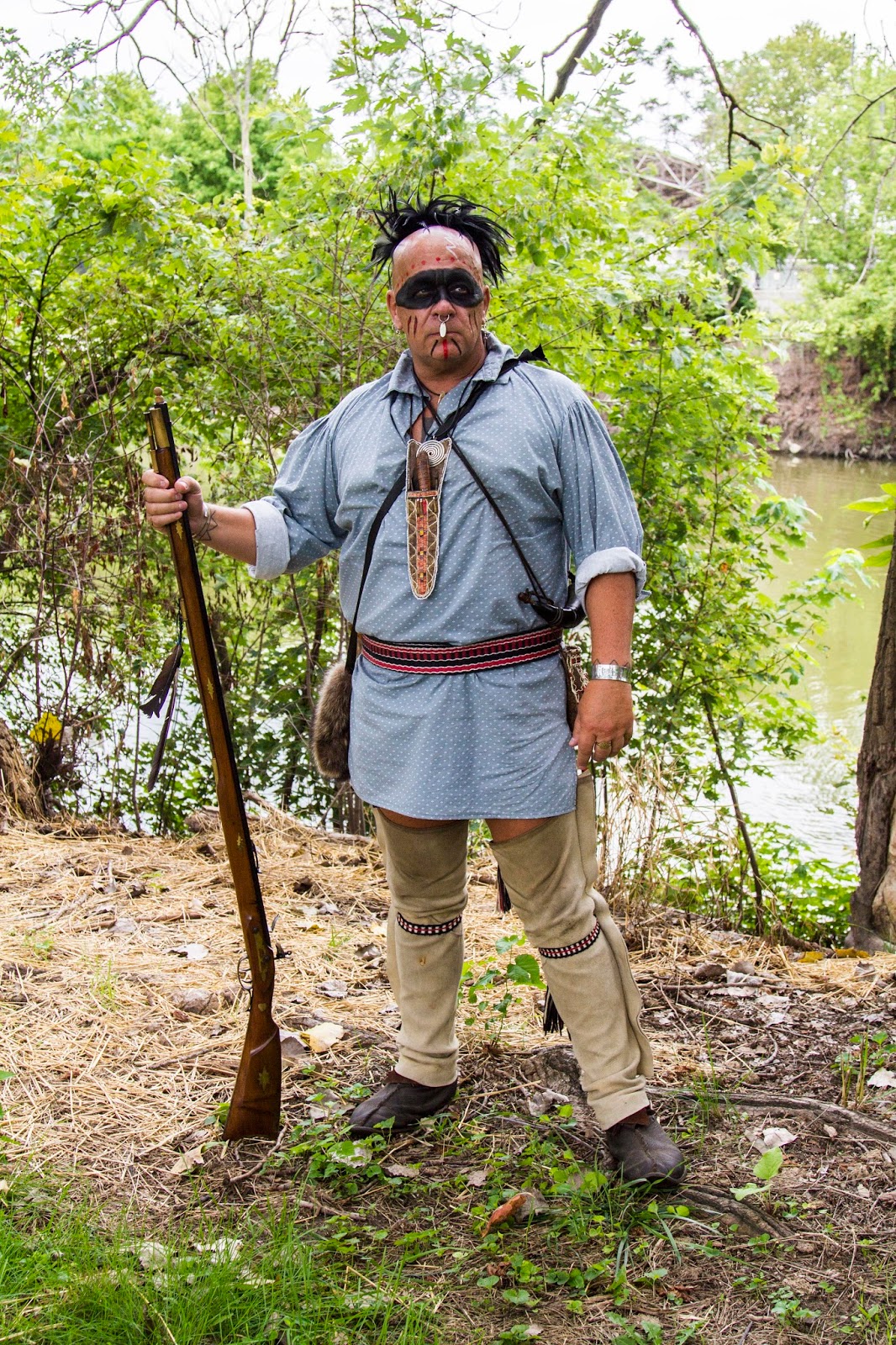
The Shawnee Indian tribe was represented  today. The interpreter traveled from Cincinnati, Ohio to participate this weekend. I made the mistake of asking him about his "costume" he grimaced and I had to change my word to "clothing". Then I was given an explanation of the skins that were used to cover his feet and legs and got a peak at his loin cloth. 


I, then, walked a few blocks to where the streets were lined with food vendors and those who were selling their creations.  Overall, I preferred the atmosphere of days gone past.  

May 11, 2016

Monticello: Feeling sorry that I slept through history class

I must have slept through history class when I was in school for every grade. Once the teacher opened her or his mouth my eyes began to roll back in my head and then before I knew it I was sleeping.  All of those dates and wars were of no interest to me then. But now it is a different story. This time around it is personal. How?  Well, once I started tracing my family history the men on the Campbell side of my family fought in every war once they arrived here in the early 1700's.  My recent trip to Virginia opened my eyes to how much I lacked in knowledge about the history of my country.   

Monticello is a daunting place. It is a large house that sits on a hill with the Blue Ridge mountains surrounding it. President Thomas Jefferson lived here. We went on a weekday and I was surprised that it was extremely busy. The guests were herded together and every 15-20 minutes a group entered the house, one group at a time in each room.  Once inside I tried to take in as much as possible. The entry hall was large with animal heads hanging on the walls and deer skins draped over the banisters. A few sculptures were displayed on tall pedestals. The rooms off to the side were smaller, which I found to be surprising. The room that fascinated me the most was the library. The original collection of over 6,000 books were sold to the Library of Congress for around $23,000. But shortly afterwards Jefferson declared, " I cannot live without books" and another collection began.  I spotted a copy of Don Quixote tucked securely behind some glass from the original collection. Sadly his second collection was sold too in 1829 to settle some debts. (I might have to do that too if I don't stop buying so many) 


Across from the main residence was a shack. There was barely enough room inside to turn around. And yet, slaves were forced to live in cramped quarters like this. Try to imagine yourself living there.  It was here that I learned a bit more of Jefferson's private life, especially regarding Sally Hemings, his slave, with whom the former President had six children with. 


There were gardens all around the estate. Not just vegetables but flower gardens too. Jefferson took great pride in the plants that were grown around the estate and documented everything that took place. 


I brought the company bear called "Grizz"along and took pictures of our travelling companion at various places such as Williamsburg in the stocks, at William & Mary College, and Monticello. It was great fun doing this and a lot of people commented that their company did the same thing. 


They say that Virginia is for lovers.  I have to agree. There is so much to do in this state and one has basically anything they could want, there are mountains and the ocean is not far away.  I live in corn fields. The land is flat and you can see for miles. The day after I came back home I cried. The weather felt as sad (rained) as I did and cried along with me. I wanted to pack up my belongings and move right then and there. Maybe I am being dramatic or not. Does anyone out there feel like this when they come back from vacation? 


Apr 30, 2016

Williamsburg, Virginia: My Experience


Once we set our feet on the Duke of Gloucester Street, I felt like we entered a time warp back to the 1700's of Colonial America. This is considered a living museum, where history is reenacted. The streets were filled with visitors as well as interpreters.  


When people first came to this country it was known as Virginia.  A place filled with landscapes and oceanic views. Eventually, the borders expanded north, south, and west.  


The first building we passed was the Capitol building, with fine round windows, and gardens in the back.


And a picturesque view from a doorway. But this was just the beginning of an adventure back in time.  


James Innes came to our side of the street to rant about freedom, taxes, and tyranny. (This man is on the cover of Colonial Williamsburg, The official Guide and yes I have a copy, even if it is for the picture of him that I wanted the book)


As various points were debated, Patrick Henry contributed with, "Hear, Hear or Aye". (famous for the quote: "Give me liberty of give me death.")


And a young Thomas Jefferson was present trying to persuade the audience to agree with his side of the argument. (Monticello, the home of Jefferson is not far from Williamsburg)


Lord North's effigy was boo'd and hissed at while we watched this demonstration. I loved every minute of it. 


There were garden paths that led to inner places of extreme beauty.


And the innermost gardens are filled with flowers, bushes, and statues. 


One day was not enough  to spend in such an historic place and to be able to comprehend the chain of events which brought our country to its present state. 


The price to get into the buildings is a bit steep, but in my mind it is well worth it.  You can come and walk around and view the demonstrations for free and also eat at any of the taverns, plus, a small park it located close to the end of the Duke of Gloucester Street for picnics.  The William and Mary College is at the end of Merchants Square. A student will give you a free tour of the building. Filming of the series Turn: Washington Spies was done in the Wren building.

But more than this, my Campbell relatives had their beginnings in Virginia. That is why I came.